

Pneumatic Hoists - there are more advantages than you think
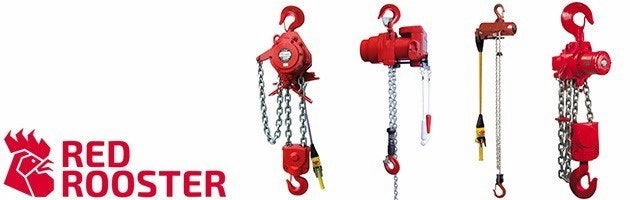
What is an Pneumatic Hoist and what is it used for?
An Pneumatic Hoist is used to lift the load up and down. Pneumatic Hoists are powered by compressed air, unlike a manual hoist or electric hoist.
Pneumatic Hoists have a number of characteristics which we have listed below:
Precision: Easily place the load with the easily adjustable speeds.
Pneumatic Hoists are not damaged by overload: the hoist slows down/stops without burning out or overheating.
Safe against power failure: A built-in brake mechanism ensures that the load is not dropped if the air pressure disappears.
Explosive environments: Pneumatic Hoists are very useful in aggressive environments where, for example, Atex approvals are required, which is often experienced in the offshore or pharmaceutical industry. Compressed air does not create sparks or anything that could pose an explosion hazard.
High resistance to corrosive atmospheres: Ambient air and pollutants do not enter the engine in an air waist.
Keeps running even in high temperatures: Pneumatic Hoists are designed to work under high temperatures.
Faster speed: Pneumatic Hoists can generally run at a much faster speed than Electric Hoists.
Which industries often use Pneumatic Hoist?
– In productions for material handling.
– Offshore.
– In applications with very high lifting height (because Pneumatic Hoists do not overheat).
– In applications requiring very fast speed.
– In applications where the hoist are often in use.
– The food industry.
– Explosive environments.
What are the differences of Pneumatic Hoists compared to Electric Hoists?
Pneumatic Hoists:
– Unlimited operation time.
– Good for high speeds.
– Suitable for use in harsh environments.
- Pneumatic Hoists are self-cooling.
– Smaller number of parts means easier repair.
– Requires that compressed air is available.
– Is more expensive to use.
– Can have more maintenance due to compressed air.
– Requires lubrication.
Electric Hoists
– 30-minute cycle with cool down.
– Drive most often at lower speeds.
– Not for use in harsh environments.
– Electric motors can overheat and stop.
– More parts and usually more complicated.
– Requires only power.
– Cheap to use.
What control tools can you get for an Pneumatic Hoist?
Pneumatic Hoists are available with different control units, e.g. control, rope, pendant and control pendant with 4 buttons.
What does an Pneumatic Hoist require to run optimally?
An air hoist requires a system with a capacity of 4 to 6.3 bar. In addition, attention must be paid to air consumption. Eg. uses our Red Rooster TCR-9000/3 – 33 liters of air per second. For further specifications see our catalog or contact us.
